Spokane Valley:
(509) 228-3834



The Golden Hour: Why the First 60 Minutes Are Vital for a Knocked-Out Baby Tooth
Did your child just lose a tooth in a fall? What should you do next?
Accidents happen in a flash, and when your child loses a tooth, it’s easy to panic. However, staying calm and acting quickly is crucial for the best possible outcome. The first 60 minutes after a tooth is knocked out are critical. During this window, you can help preserve the tooth, reduce the risk of infection, and ensure the least amount of damage.
In this blog, we’ll walk you through the steps to take immediately, why those first 60 minutes are so vital, and tips on preventing future dental accidents. The more you know, the more you can help your child in this moment of dental emergency.
Understanding the Golden Hour
What is the “Golden Hour” for a Knocked-Out Baby Tooth?
The “Golden Hour” refers to the first 60 minutes after a tooth is knocked out. This is the most important period to increase the chances of saving the tooth. Just like in medical emergencies, the sooner you take action, the better the outcome. For baby teeth, this period is crucial because the cells in the root begin to die off shortly after the tooth is lost.
A baby tooth may not be as permanent as an adult tooth, but it still plays a significant role in the development of your child’s mouth. When a baby tooth is lost prematurely, it can affect their speech, chewing ability, and the alignment of future teeth. Immediate re-implantation within the Golden Hour offers the best chance for reattaching the tooth and avoiding further complications.
Why is This Window of Time So Important?
If you wait too long after the accident, the tooth becomes less viable to re-implant. The root begins to dry out and may not properly reattach to the gums, which can lead to infection or other dental issues. Additionally, an untreated gap in the gum can cause the remaining teeth to shift, affecting your child’s bite and smile. The quicker you act, the better the chances of saving the tooth and preventing long-term dental complications.
Immediate Steps to Take
What to Do Immediately After the Tooth is Knocked Out
When your child loses a tooth, here’s what you need to do:
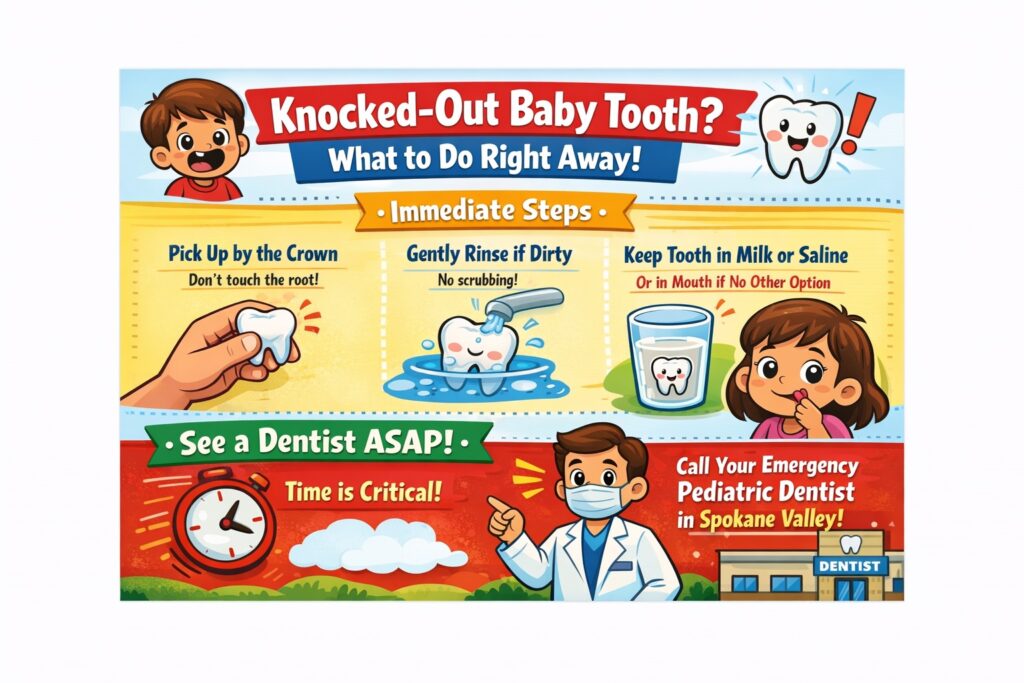
- Retrieve the Tooth Gently: Always handle the tooth by the crown (the top part). Avoid touching the root as this can damage the cells needed for re-implantation.
- Clean the Tooth (If Necessary): If the tooth is dirty, rinse it gently under cold water. Avoid scrubbing or using soap, as this can damage the root cells.
- How to Store the Tooth: Store the tooth in a container with milk or saline to keep it moist. If no other options are available, have your child keep the tooth in their mouth (between the cheek and gum). This can keep it safe until you can get to a pediatric emergency dentist in Spokane Valley.
When to Seek Immediate Dental Help
You should contact your pediatric emergency dentist immediately after the incident. The quicker you get to the dentist, the higher the chance of saving the tooth. At Dr. C Kids Dentistry, we offer urgent care for dental emergencies like knocked-out teeth. When you arrive, the dentist will assess the condition of the tooth and gums and determine the best course of action.
Remember, time is crucial, so don’t wait. A prompt response can make all the difference in saving the tooth and ensuring your child’s oral health.
Why the First 60 Minutes Matter for Baby Teeth
Preserving the Tooth’s Integrity
When a baby tooth is knocked out, it may seem less important than an adult tooth. However, saving the tooth within the first 60 minutes is crucial for your child’s overall oral development. Baby teeth, though temporary, serve as space holders for the permanent teeth that will come in later. They help guide the adult teeth into the correct positions, ensuring proper alignment and function in the long run.
If a baby tooth is lost prematurely and not saved, it can lead to a variety of issues, including shifting of the surrounding teeth, which can create problems when the permanent teeth emerge. This misalignment can sometimes lead to the need for orthodontic treatment later on, such as braces, which could have been avoided if the baby tooth was saved.
Furthermore, preserving the baby tooth helps maintain your child’s ability to chew and speak properly. A missing tooth, especially at a young age, can affect their bite and speech development, which is why prompt action to save the tooth is critical. Replanting the tooth as soon as possible gives it the best chance of reattaching, and it can continue serving its purpose in the child’s mouth until it naturally falls out.
The Difference in Handling a Baby Tooth vs. Adult Teeth
Handling a baby tooth is very different from handling an adult tooth. Baby teeth have thinner, softer roots and a smaller root system, making them more delicate and susceptible to damage once knocked out.
The root of a baby tooth is also more prone to drying out, which is why quick action within the first 60 minutes is essential. Moreover, the root cells of a baby tooth are more sensitive, and when they dry out, it becomes much harder for the tooth to reattach to the surrounding gum tissue. The quicker you act, the better the chance of successfully preserving the tooth.
Unlike adult teeth, baby teeth are not as crucial for long-term oral health, as they will eventually be replaced by permanent teeth. However, that doesn’t mean they aren’t important. When a baby tooth is saved, it maintains the integrity of your child’s smile and ensures that the surrounding teeth don’t shift or grow incorrectly.
Preventing Infections and Long-Term Issues
One of the most significant risks of leaving a knocked-out baby tooth untreated for too long is the potential for infection. Once a tooth is knocked out, the root is exposed, making it an easy entry point for bacteria.
The first 60 minutes are crucial because they give the tooth the best chance of reattaching to the gum tissue without bacteria invading the root area. If the tooth is left outside of the mouth for too long, it will begin to dry out and can lead to a bacterial infection, which can affect the surrounding tissue and even the developing permanent tooth beneath.
Preventing infections also involves avoiding further damage to the gum tissue where the tooth was knocked out. Once the tooth is re-implanted, it’s essential to follow proper aftercare instructions from your pediatric dentist to minimize the risk of infection and ensure proper healing.
By acting quickly and getting immediate dental help, you reduce the chances of an infection developing, which could lead to more complicated treatments later on, such as a root canal or even the need to extract the tooth completely.
In summary, the first 60 minutes after a knocked-out baby tooth are essential for both preserving your child’s smile and ensuring their future dental health. Quick action can prevent alignment issues, infections, and further complications, so don’t hesitate to seek immediate help from a pediatric dentist.
What Happens After the Golden Hour?
Beyond the First 60 Minutes: What to Expect
If more than 60 minutes pass without successful re-implantation, the chances of saving the tooth decrease. Your pediatric emergency dentist in Spokane Valley will then guide you through the next steps, which may include space maintainers to help preserve the alignment of your child’s teeth while they await the arrival of the permanent tooth.
While baby teeth may not always be able to be saved, the dentist will help ensure the best possible solution to keep your child’s oral health on track.
When Is it Safe to Let the Tooth Heal Naturally?
In some cases, if the tooth is successfully re-implanted within the first hour, it may heal naturally. Your dentist will provide instructions for proper care, including avoiding hard or sticky foods for a few days. It’s important to keep an eye on the healing process and follow up with regular check-ups to ensure everything is healing correctly.
Preventing Future Accidents
How to Protect Your Child’s Teeth Moving Forward
Accidents happen, but there are steps you can take to protect your child’s teeth and prevent future incidents:
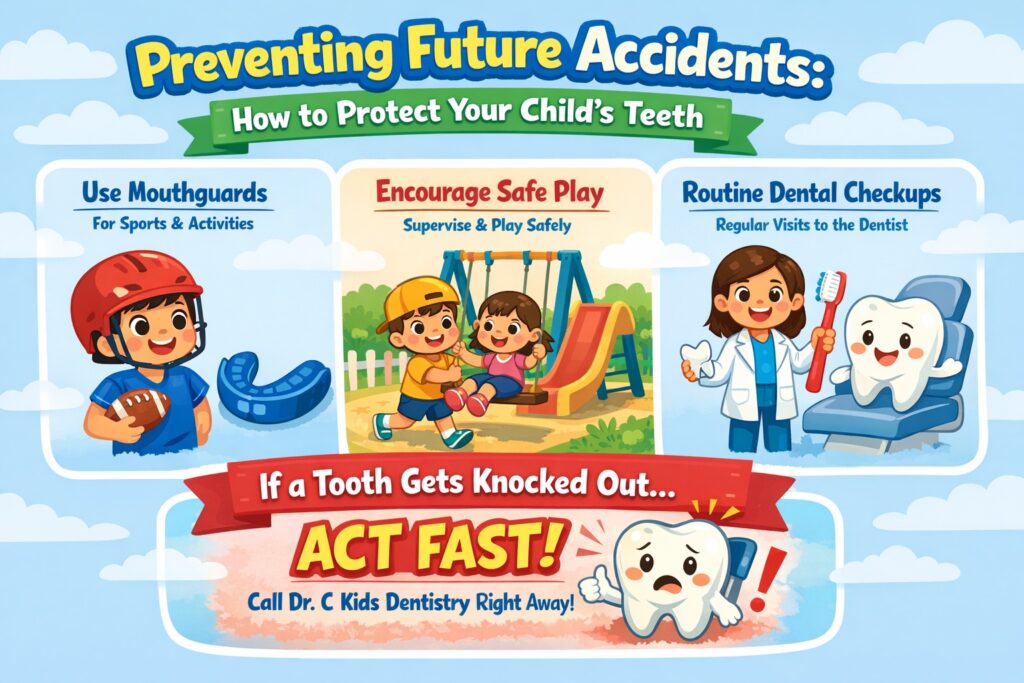
- Use Mouthguards: If your child plays sports, a custom mouthguard can significantly reduce the risk of tooth damage. Whether they’re into football, basketball, or any other contact sport, a mouthguard is a must.
- Encourage Safe Play: Ensure that your child plays in a safe environment and is supervised during rough play, especially when playing outdoors or engaging in activities that might lead to falls or accidents.
- Routine Dental Checkups: Regular visits to Dr. C Kids Dentistry help monitor your child’s dental development and catch potential issues early, including risk factors for injury.
The first 60 minutes after a baby tooth is knocked out can determine whether it can be saved or if further complications will arise. By acting quickly, you have the best chance of preserving your child’s tooth and preventing long-term issues. Don’t hesitate. Contact a pediatric emergency dentist immediately to ensure your child’s smile is in good hands.
If your child has a knocked-out baby tooth, don’t wait! Contact Dr. C Kids Dentistry right away to ensure the best outcome for their smile.
Common Questions About Knocked-Out Baby Teeth
How should I store a knocked-out tooth?
Store it in milk, saline, or have your child keep it in their mouth until you see the dentist.
What if I can’t find the knocked-out tooth?
Stay calm and check your child’s mouth carefully. If the tooth isn’t found, contact a pediatric dentist right away. Clinics like Dr. C Kids Dentistry can examine the area and may use X-rays to check for hidden damage or complications.
How do I know if my child’s tooth can be saved?
Your pediatric dentist will assess the situation and recommend re-implantation if possible.
Is it safe to wait before contacting the dentist?
No, time is crucial! Contact an emergency dentist right away for the best chance of saving the tooth.
What happens if the baby tooth can’t be re-implanted?
If the tooth can’t be saved, the dentist will ensure proper healing and may use a space maintainer to keep nearby teeth from shifting. This helps protect your child’s future smile until the permanent tooth grows in.