Spokane Valley:
(509) 228-3834

My Child Chipped a Baby Tooth: Does it Really Matter if it’s Falling Out Anyway?
Are you in a dental emergency? Call us: (509) 350-2422
A dental emergency happens in an instant. In one moment, your child is racing around the backyard or exploring the jungle gym at a local Spokane Valley park, and the next, a chip in one of their teeth. For many parents, the first reaction will be, “But it’s only a baby tooth, does it even matter?” If that thought has ever crossed your mind, then you’re not alone.
While a child’s baby teeth are only in their mouth for a few years, they are instrumental in their development, and a chip can cause discomfort, difficulty in eating, and problems with how their permanent teeth erupt. Knowing what is important and what’s not will allow you to decide at a crucial moment.
What Actually Happens When a Tooth Chips
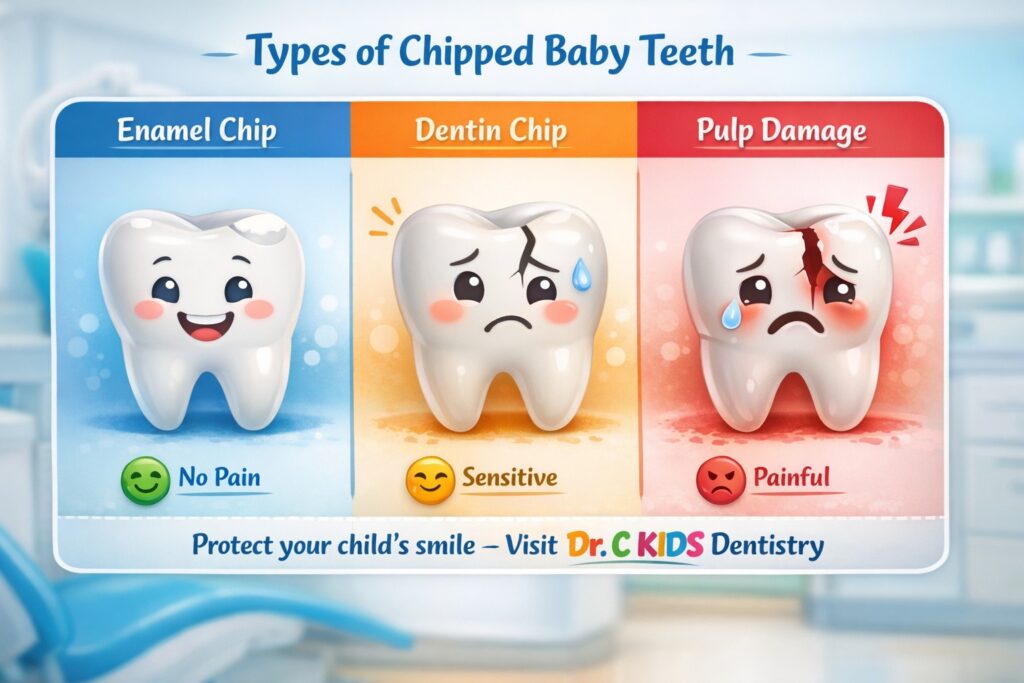
Chips come in a range of sizes, from almost invisible cracks to deep breaks that could leave delicate internal structures vulnerable. The deeper it is, the more urgent the concern.
- Chip to the Enamel: Most small chips just shave off the outermost layer of the tooth. These normally don’t cause pain but often benefit from professional smoothing. If they are minor and unnoticeable to your child, watching and waiting is appropriate.
- Chip to the Dentin: If the break runs deeper into the dentin, the layer beneath the enamel, your child may start to notice the tooth reacting to hot and cold food and drink.
- Chip to the Pulp: If the chip is deep enough to affect the nerve, your child will likely experience pain. At this point, treatment is needed to prevent infection.
- Irritation of other parts of the mouth: A sharp chip on any part of the tooth can irritate the tongue or cheek when eating, chewing, or speaking.
When It’s Time to Take Action
Not all chips require immediate emergency dental care, though some do. Early detection of critical issues can prevent longer-term complications.
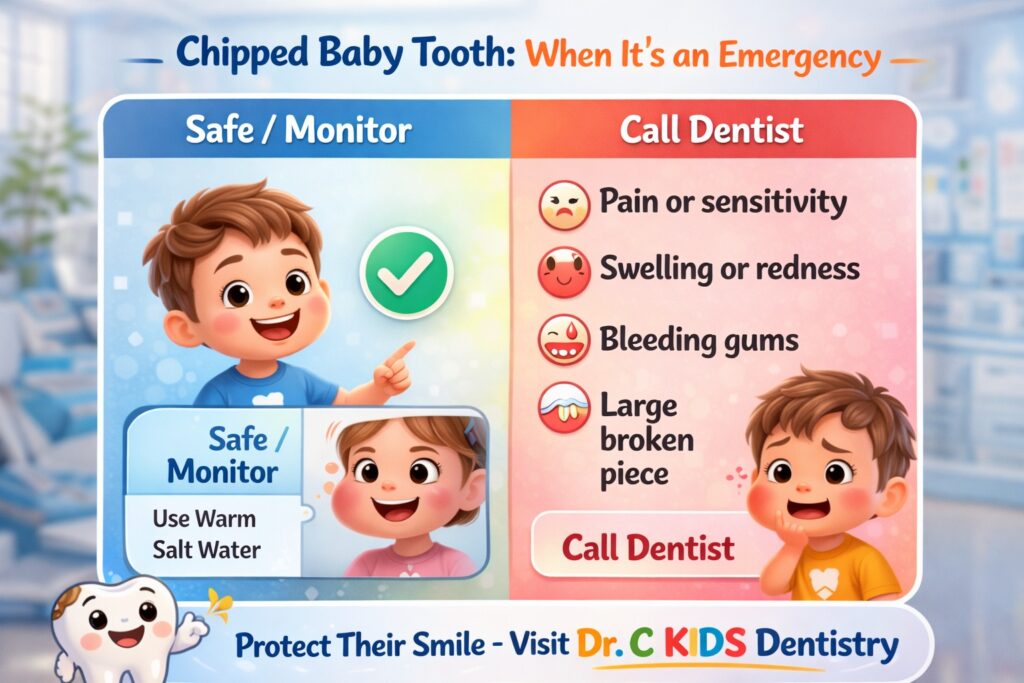
- A large portion of the tooth is missing: Anything more than a tiny chip or fracture will likely warrant professional care, as it puts the tooth at risk for future damage and may require repair.
- Pain and sensitivity to temperature: If your child complains of discomfort during or immediately after consuming anything hot, cold, or sweet, the underlying pulp may be damaged.
- Swelling or redness of the gums: These are outward signs of potential infection inside the tooth.
- Bleeding from the gum line: If blood is present around the traumatized area, it may indicate an injury to underlying structures extending beyond the enamel.
If you observe any of the above, it’s wise to seek out an emergency dentist for kids in Spokane Valley.
What Happens If You Ignore A Cracked Tooth
At first, you might just be tempted to wait and see if things get better on their own, particularly if your child doesn’t seem to be in much pain. However, leaving a chipped tooth unattended can have other consequences besides the initial trauma. Read about complications of untreated chipped teeth in children:
- Potential for infection: The break in the tooth provides an opening for bacteria to get inside the tooth, which could result in pain and inflammation.
- Development of decay: The rough, jagged edge on a chipped tooth is more likely to decay. Food also tends to get stuck between the jagged surfaces, which can promote decay.
- Involvement of other teeth: If the damage leads to infection or decay within the chipped tooth, these problems can spread to the surrounding teeth.
- Problems with the eruption of adult teeth: Damage or loss of baby teeth can affect how the underlying adult tooth comes in.
Easy Steps You Can Take Immediately
There are some relatively simple and safe steps you can take while on the way to the dentist, which will protect your child’s tooth and ease their discomfort:
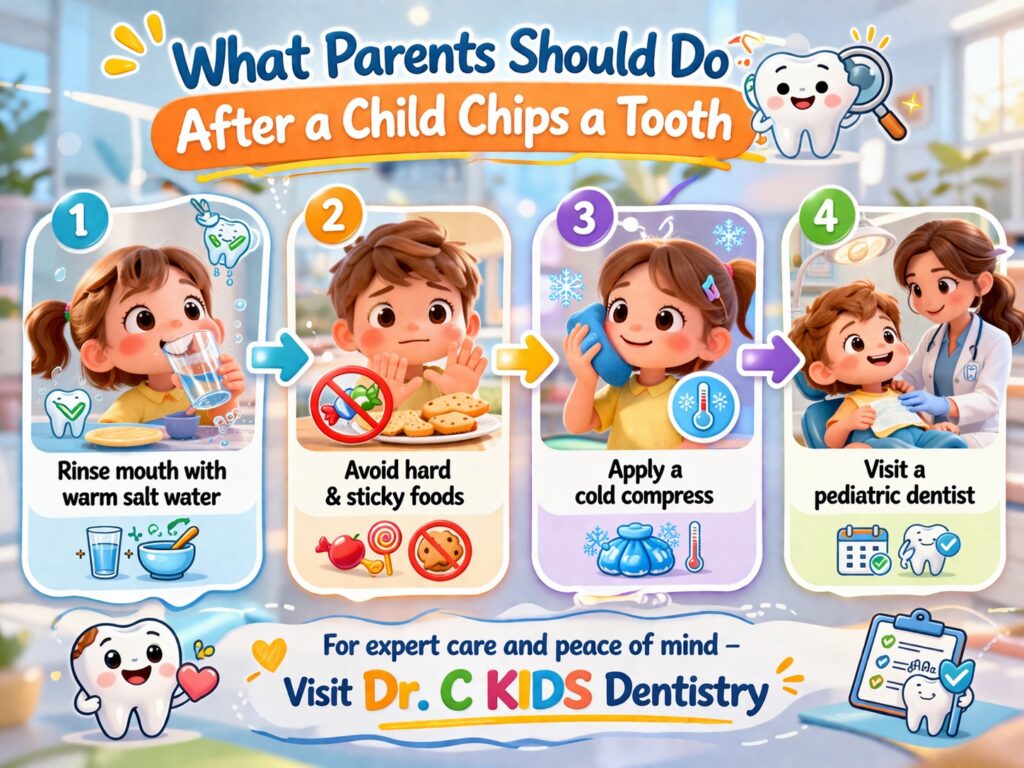
- Clean the mouth with warm salt water.
- Avoid hard or sticky foods.
- Apply a cold compress to the area if swelling occurs.
- Monitor the area for pain or other symptoms for the next 24 hours.
The Importance of Baby Teeth
Baby teeth act more as placeholders. They are instrumental in speech development and chewing, and most importantly, they create the space that the permanent teeth will eventually occupy. A chipped tooth is much more than a cosmetic issue. Read more on why addressing a chip is often important.
- Aid in efficient chewing: Baby teeth provide a smooth, complete surface for chewing. An injured tooth may make eating difficult, especially for a child’s diet, with snacks and school lunches often being crunchy or requiring strong chewing.
- Enable the development of clear speech: Teeth are essential for producing the sounds of words, so any damage to a tooth can impact a child’s articulation during a crucial stage in their speech development.
- Hold space for permanent teeth: Each baby tooth holds a designated spot for its permanent replacement. If a tooth is knocked out prematurely, it can cause other teeth to shift, requiring a later orthodontic intervention.
- Protect soft oral tissues: A chipped tooth may have an irregular edge that can irritate your child’s cheek or lip.
Treatment Of A Chipped Baby Tooth
The specific treatment for a chipped baby tooth depends on the extent of the chip, with the overall goal of preserving the tooth, avoiding discomfort, and preventing future complications. Treatments are generally simple and are tailored to your child’s specific needs:
- Smoothing the sharp edge: If there is a small chip, a slight polish of the tooth can make it smoother and less likely to cause discomfort.
- Dental bonding: For larger chips or when the edge of a tooth is chipped, a tooth-colored filling material can be applied to the chipped area. This fills the chip and protects any exposed inner part of the tooth.
- Protective coverings: In some circumstances, a small crown may be placed over the tooth.
- Removal of the tooth: In instances of severe chipping or when it might compromise oral health, the tooth may need to be extracted.
An emergency dentist for kids in Spokane Valley can help with these cases and manage them properly.
When a Chipped Tooth Might Not Be a Big Concern
Not all chipped teeth lead to problems. Certain circumstances present a lower level of risk, but parents should still be able to identify a “low risk” condition:
- Small chip in enamel only: In some cases, very minute chips in the outer enamel layer of the tooth may cause no pain at all and require no treatment.
- Lack of sensitivity or discomfort: If your child can eat and drink normally, the chip poses less of a risk.
- No change in color: An intact baby tooth will have its normal, white color. Color change in a chipped tooth may signal inner damage and require attention.
- No loosening: If the tooth remains stable within the jaw, the trauma suffered was probably less severe.
Final Thoughts for Parents Navigating Dental Injuries
While a chipped baby tooth may not always pose a major problem, allowing it to go untreated can cause more extensive issues beyond the current damage. Early examination and care can help ensure that the tooth and surrounding tissues are safe while allowing the child to progress through developmental stages without additional discomfort.
Taking the initiative on small things at home, along with effective care, can prevent the situation from worsening. At Dr. C Kids Dentistry, families in Spokane Valley have a place to turn when these situations arise. If your child chips a tooth or shows signs of discomfort, scheduling a visit can help you move forward with clarity and confidence.
Questions People Ask About a Chipped Tooth
What should I do if my child chips a baby tooth?
If your child chips a baby tooth, first assess the damage. If it’s small and doesn’t cause pain, it may not need immediate treatment. However, if the chip is large, causes discomfort, or results in bleeding, see a dentist as soon as possible.
Can a chipped baby tooth be repaired?
Yes, a chipped baby tooth can often be repaired with bonding or a filling. If the chip is large or the tooth is infected, a dentist may recommend additional treatments to restore the tooth’s function.
Will a chipped baby tooth affect my child’s permanent teeth?
While baby teeth are temporary, they play a crucial role in guiding the eruption of permanent teeth. A chipped tooth could lead to misalignment or other dental issues if left untreated, affecting the growth of permanent teeth.
How long can I wait to see a dentist if my child chips a tooth?
It’s best to see a dentist as soon as possible if the chip is large, causing pain, or if the tooth is at risk of infection. A dentist can determine the best course of action to prevent further damage.
Can I wait for the tooth to fall out on its own?
While it’s true that baby teeth eventually fall out, it’s important to seek care if the tooth is damaged, as untreated chips can lead to infection or other dental issues that can affect your child’s health.
Should I give my child pain relievers for a chipped tooth?
Over-the-counter pain relievers such as ibuprofen or acetaminophen can help alleviate discomfort from a chipped tooth. Always follow the dosage instructions provided by your child’s pediatrician to ensure their safety.