Spokane Valley:
(509) 228-3834



How Tongue-Ties Contribute to Sensory Issues and Food Aversion in Toddlers
Have you noticed your toddler hesitating or refusing certain foods, or struggling to chew properly? It could be more than just a picky eater. A common yet often underrecognized condition called tongue-tie may be playing a role.
Tongue-tie, also known as ankyloglossia, can lead to difficulties in feeding and contribute to sensory issues that affect your child’s ability to enjoy different textures and tastes. This condition can be a silent contributor to food aversion and sensory sensitivities, making it harder for your little one to fully experience the joy of eating.
At Dr. C Kids Dentistry in Airway Heights, we understand how this condition can affect your toddler’s well-being and are here to help parents navigate its impact.
What is Tongue-Tie?
Tongue-tie, or ankyloglossia, is a condition where the thin piece of tissue (frenulum) that connects the tongue to the bottom of the mouth is unusually tight or short. This restriction limits the tongue’s movement, which can cause various challenges during feeding, speaking, and oral development. Tongue-tie varies in severity, ranging from mild cases where only minor restrictions are present to severe cases where the tongue’s mobility is significantly limited.
In mild cases, toddlers may show minor feeding difficulties, while in more severe cases, the tongue may be unable to move properly to latch onto the breast or chew food effectively.
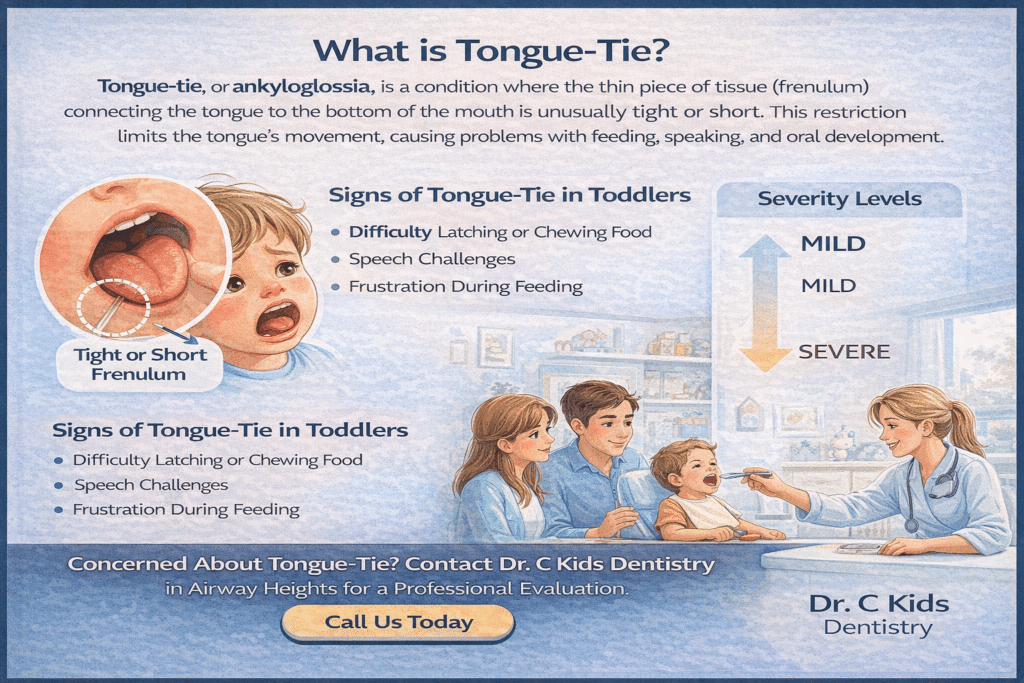
Tongue-tie in Airway Heights can be diagnosed by a pediatric dentist who assesses the tongue’s range of motion and its effect on feeding and speech. While many parents may not notice the issue right away, it’s important to seek an evaluation if you suspect tongue-tie might be affecting your child’s eating habits.
How Tongue-Tie Affects Feeding in Toddlers
The role of the tongue in feeding is crucial, whether it’s breastfeeding as an infant or eating solid foods as a toddler, the tongue is responsible for helping to latch, suck, chew, and swallow. A restricted tongue from tongue-tie can make these tasks difficult and uncomfortable. Infants with tongue-tie often experience issues with breastfeeding, including poor latch, slow feeding, or nipple pain for the mother.
As your child transitions to solid foods, these initial feeding challenges can extend into toddlerhood, affecting their ability to chew and swallow food properly. For example, toddlers with tongue-tie may struggle to move food around their mouths efficiently, leading to frustration during meals and a tendency to reject certain food textures. If chewing becomes difficult or painful, your toddler may show a preference for softer foods or liquids, avoiding solids altogether.
This difficulty in chewing may also result in delayed eating milestones, such as refusal to try new foods or reluctance to transition to a varied diet.
The Connection Between Tongue-Tie and Sensory Issues
Tongue-tie can contribute to sensory issues in toddlers, particularly with food. Sensory processing refers to how the brain interprets and responds to information from the senses, and food-related sensory challenges are common in children with restricted tongue movement. When a child struggles to chew or swallow effectively, they may develop sensitivities to certain textures, tastes, and temperatures of food.
For example, toddlers with tongue-tie may be particularly sensitive to the textures of solid foods, such as chunky or textured foods, making them more likely to gag, choke, or feel discomfort. This discomfort can contribute to food aversion, as the child associates certain foods with negative sensory experiences. In addition, they may prefer foods that are easier to manage, like liquids, pureed foods, or soft items, and may reject anything that feels unfamiliar or difficult to process.
This sensory sensitivity can be frustrating for both parents and children, as it can lead to limited food choices and hinder the development of a balanced diet. Over time, this can affect your toddler’s nutrition and social experiences around meals, making it important to address sensory issues early on.
Food Aversion in Toddlers: The Role of Tongue-Tie
Food aversion is a common issue in toddlers, and tongue-tie can play a significant role in exacerbating the problem. Children with tongue-tie may develop an aversion to certain types of food due to the discomfort or difficulty they experience during mealtime. For instance, toddlers with tongue-tie may have trouble with chewing solid foods, which can lead to a preference for easier-to-eat options like liquids or purees.
When food becomes associated with difficulty, pain, or discomfort, children may refuse to try new textures or avoid eating altogether. Common signs of food aversion linked to tongue-tie include gagging, difficulty moving food around in the mouth, or a refusal to chew on anything other than soft foods.
Additionally, toddlers with tongue-tie may have a hard time transitioning to solid foods, which can delay their ability to enjoy a wide variety of foods and textures. As parents, recognizing these behaviors and addressing the underlying issue of tongue-tie can be crucial in helping your child overcome food aversion and develop healthy eating habits.
How to Address Tongue-Tie-Related Sensory Issues and Food Aversion
If you suspect that tongue-tie is contributing to your toddler’s sensory issues or food aversion, it’s important to seek professional evaluation. Early diagnosis and treatment can help prevent long-term feeding challenges.
Treatment options for tongue-tie in Airway Heights may include frenotomy, a simple procedure that involves cutting the frenulum to release the restriction and allow the tongue to move freely. This procedure is typically quick, minimally invasive, and can provide immediate improvement in tongue movement.
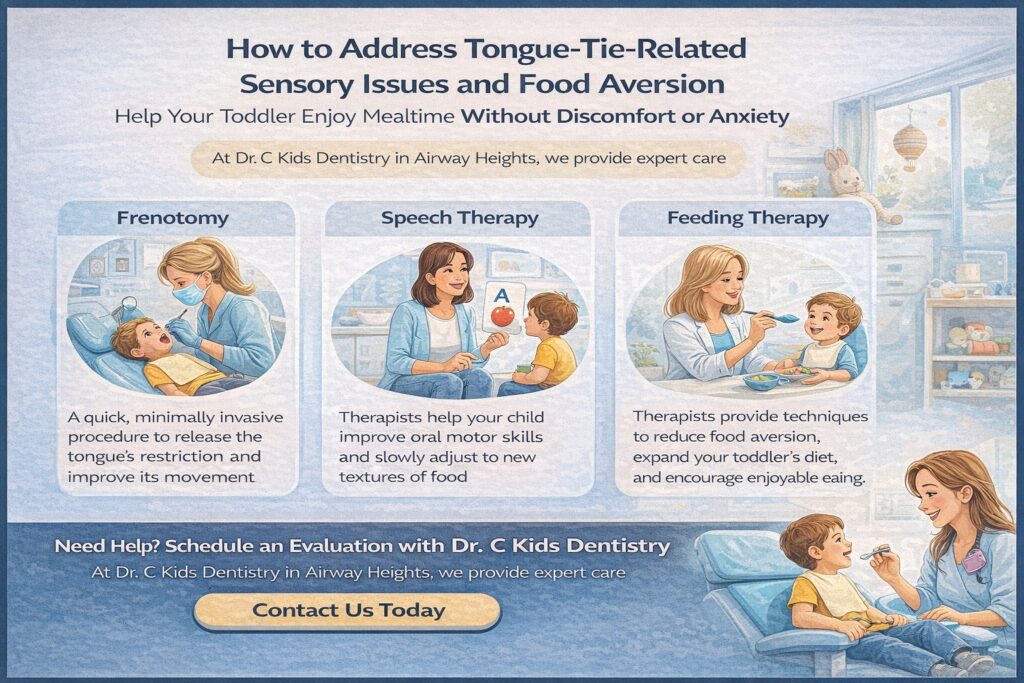
In addition to frenotomy, speech therapy or feeding therapy may be recommended to help your child adjust to different textures and improve their eating skills. Therapists can guide parents in slowly introducing new foods, provide techniques to reduce food aversion, and support the development of healthy oral motor skills.
At Dr. C Kids Dentistry in Airway Heights, we offer comprehensive evaluations and treatments to address tongue-tie and its effects on your child’s eating habits. We work closely with families to ensure that their toddlers can enjoy mealtime without discomfort or anxiety.
When to Seek Professional Help
If you notice signs of food aversion, difficulty with breastfeeding, or challenges with chewing and swallowing in your toddler, it may be time to seek professional help. A pediatric dentist can help assess the issue and determine whether tongue-tie is contributing to your child’s feeding difficulties. Early intervention is key to improving feeding skills and preventing further sensory sensitivities.
For parents in Airway Heights and the surrounding areas, Dr. C Kids Dentistry is here to provide expert care. Our team is dedicated to addressing your child’s oral health and ensuring that they develop healthy, enjoyable eating habits. Reach out to us today to schedule an appointment and learn more about how we can help your toddler thrive.
Tongue-tie is a condition that can significantly impact a toddler’s feeding habits, leading to sensory issues and food aversion. If your child is struggling with eating or exhibiting signs of food aversion, it’s important to consider the role of tongue-tie and seek professional evaluation. Early treatment can improve your child’s ability to enjoy mealtime and lead to healthier eating habits.
At Dr. C Kids Dentistry, we are committed to providing personalized care to address your child’s specific needs. If you suspect that tongue-tie is affecting your toddler, contact us today for an evaluation and take the first step toward improving your child’s feeding experience.
Common Questions About Tongue-Tie and Feeding Difficulties in Toddlers
Can tongue-tie affect speech development?
Yes, tongue-tie can impact speech development by limiting the tongue’s movement, making it harder for toddlers to form certain sounds.
How is tongue-tie diagnosed?
Tongue-tie is diagnosed by a pediatrician, dentist, or speech therapist who evaluates the tongue’s range of motion and its effect on feeding and speech.
Does tongue-tie only affect infants?
No, while it’s often identified in infancy, tongue-tie can affect toddlers and even older children, continuing to impact feeding and speech if not treated.
Is the frenotomy procedure painful for toddlers?
Frenotomy is a quick and minimally invasive procedure with little to no discomfort, and most toddlers recover quickly afterward.
When should I seek help for tongue-tie in my toddler?
If your toddler has trouble with eating, chewing, or speech, or shows signs of food aversion, it’s best to seek a professional evaluation.